
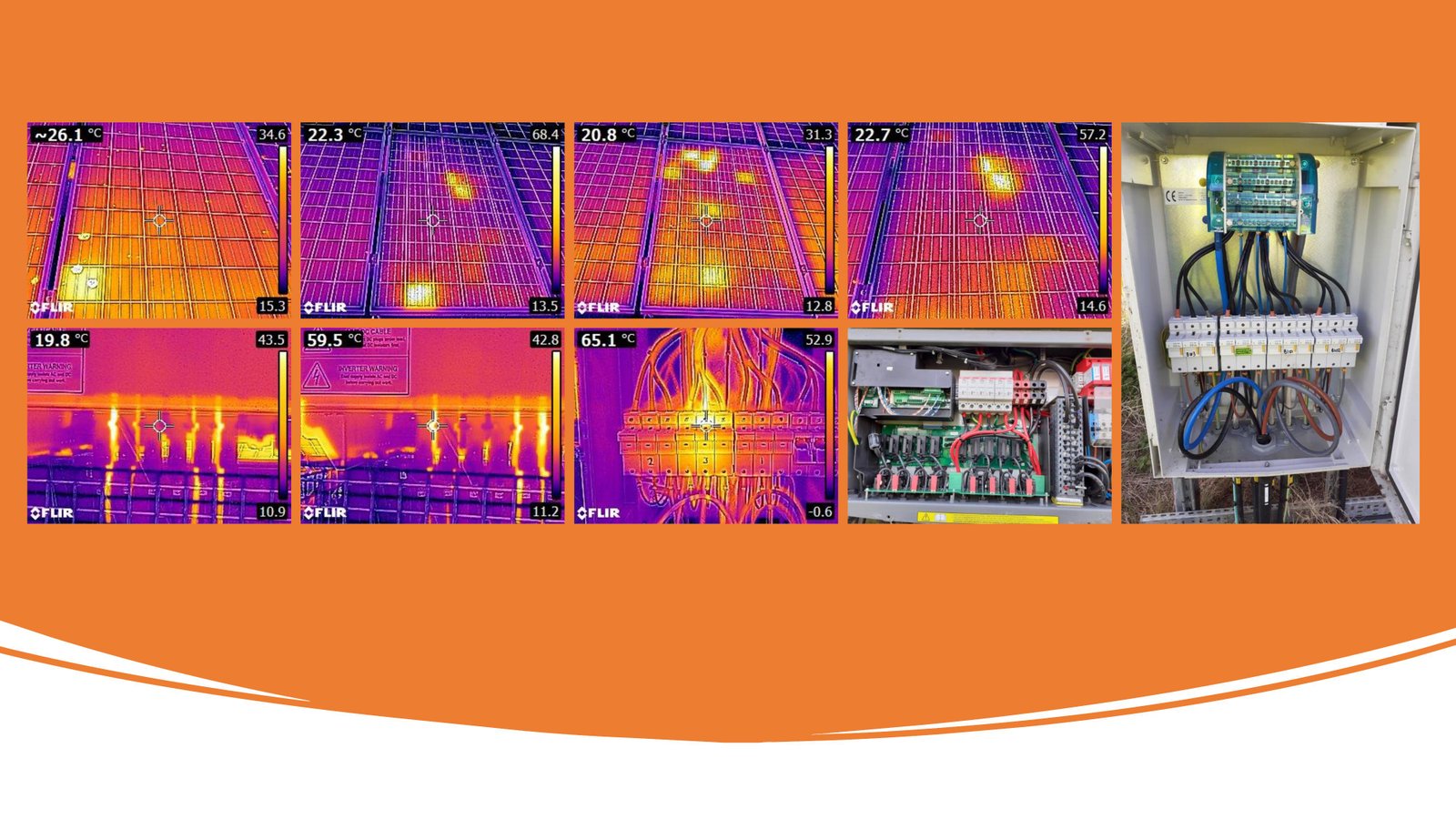
Before you accept a solar installation, you need evidence that the work meets the agreed technical requirements. We use inspections and testing to identify defects, check electrical performance and highlight items that still need attention. This helps your team address problems before handover and understand the condition of the installation as it enters operation.
Key Focus Areas
- Thermal Inspection
- I-V & Electrical Testing
- Defect Identification & Reporting
- Acceptance & Compliance
Problems We Solve
- Hotspots and thermal anomalies that require further investigation
- Module or string defects that are difficult to identify from routine monitoring
- Uncertainty about installation quality before commissioning or handover
- Missing test records or unresolved findings at project acceptance
- Suspected electrical or equipment issues affecting solar generation
Services We Provide
We use aerial thermal imagery to inspect solar installations and locate temperature patterns that may indicate equipment or operating issues. This provides a broad view of the array and helps identify areas that warrant closer investigation. Findings are assessed in the context of inspection conditions and available project information, helping your team target follow-up checks rather than relying on thermal images alone to establish a fault.
We use handheld thermal inspection to investigate localised temperature anomalies in accessible equipment and electrical connections. This closer examination can support the investigation of issues identified through monitoring, visual inspection or drone surveys. The findings help the engineering team determine where further electrical checks or corrective work may be needed, with inspection coverage agreed around site access and operating conditions.
We measure the current-voltage characteristics of selected PV modules or strings to assess their electrical behaviour and investigate suspected underperformance. Test results are interpreted alongside the relevant environmental conditions and equipment information to identify deviations that need further review. This provides more specific evidence for fault diagnosis and helps your team determine the appropriate next steps for affected parts of the array.
We perform electrical testing on the direct-current and alternating-current parts of the installation within the agreed scope. Testing provides evidence about installation condition and helps identify issues requiring attention before commissioning, handover or continued operation. Results are documented for engineering review so that the project team can understand what has been tested, what was found and which matters remain unresolved.
We bring inspection observations and test results together in a technical report that explains identified issues and recommended follow-up actions. The report links findings to the available evidence and distinguishes confirmed defects from anomalies requiring further investigation. This gives owners, contractors and maintenance teams a clearer basis for assigning corrective work and tracking the technical questions that still need to be resolved.
We review relevant inspection and test evidence against the agreed project requirements to support commissioning and acceptance decisions. The review identifies outstanding findings, missing records and technical matters requiring clarification before the relevant milestone can be assessed. This helps your team understand the installation's documented status and the additional work or evidence needed to support handover.
Our Approach
Inspect
Capture comprehensive visual and thermal data across the installation.
Measure
Perform electrical testing and I-V curve analysis.
Identify
Detect anomalies, deviations and potential failure points.
Report
Document findings, corrective actions and recommendations.
Verify
Support acceptance and future compliance verification.