Repowering Through Technological Evolution
Closing the performance gap through repowering can be evaluated through the Energy Yield Gains from Technology Evolution. Global PV capacity has grown from 4.9 GW in 2005 to nearly 1,900 GW by 2024. Much of this capacity was installed with early-generation modules, inverters, and balance-of-system components that are now reaching technical or economic limits. The main components for energy generation on a solar plant are PV Modules and Inverters. Their technological evolution has meant repowering can be achieved in a more efficient manner and improving the energy yield from the Asset.
Modern PV modules, inverters, and Balance of System (BOS) components can deliver 30–60% higher energy yield, lower degradation rates, longer equipment lifetimes, and better grid support. Over the past 10–15 years, the energy efficiency of PV modules has improved significantly, increasing from 14–15% to an average of 21–22%, and in some cases even higher, while degradation rates have dropped from around 1% to 0.3–0.4%. When combined with optimised DC/AC ratios, the use of string inverters over central inverters (check article XXX), and modern inverter technologies. These advancements create a widening performance gap between what existing plants currently produce and what they could achieve. This makes repowering an obvious optimisation step. Early PV plants typically used inverters with 10–12-year lifetimes, whereas modern inverter technology now offers 20–25-year design life, grid-forming and voltage support, and lower losses with higher availability. Consequently, solar inverter replacement and inverter retrofit have become central to PV system upgrades, solar system retrofits, and PV plant revamping, enabling significant improvements in operational performance, energy output, and asset life.
The repowering or revamping is becoming a hot topic in renewables, especially on Solar PV, being a highly evolving and technically and financially reliable renewable system.
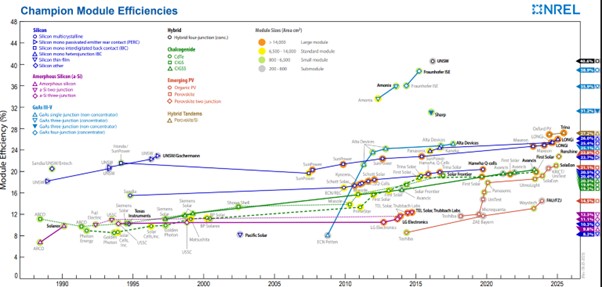
Repowering provides a cost-effective means to extend asset life, prevent premature decommissioning, and achieve substantial performance improvements. Technological evolution plays a huge role in this process. A report from NREL shows how PV modules have evolved has occurred over the years. Similar advancement in inverter technology has also occurred.
Repowering can make renewable energy truly renewable and drive the whole solar industry towards sustainability and a greener future. Repowering enables solar plant refurbishment instead of new construction, photovoltaic performance enhancement on existing land, and long-term solar lifetime extension.
Technological evolution on the energy generation components of a solar plant i.e. modules and inverters mean unlocking their second life, transforming old plants into modern, efficient, and low-carbon assets, delivering higher energy output, stronger grids, and lasting value for communities. Beyond operational improvements, it minimises environmental impact, reduces resource consumption, and avoids the need for additional land, making solar energy deployment more responsible and sustainable. This approach not only maximises the potential of existing solar infrastructure but also contributes to the ultimate goal of creating a better world in a changing climate.
#GreeEnco® #Creating Better Word in a Changing Climate #Repowering of PV #Asset Optimisation #Solar PV #SecondLife #Sustainable Development