Repowering: Giving Solar PV Assets a Second Life
Global PV capacity has grown from 4.9 GW in 2005 to nearly 1,900 GW by 2024. Much of this capacity was installed with early-generation modules, inverters, and balance-of-system components that are now reaching technical or economic limits. The repowering or revamping is becoming a hot topic in renewables, especially on Solar PV, being a highly evolving and technically and financially reliable renewable system.
Repowering provides a cost-effective means to extend asset life, prevent premature decommissioning, and achieve substantial performance improvements. Let's deep dive and see what else the second life can offer. Also, explore why and how it matters for the sustainable PV industry growth.
Ageing PV assets at scale
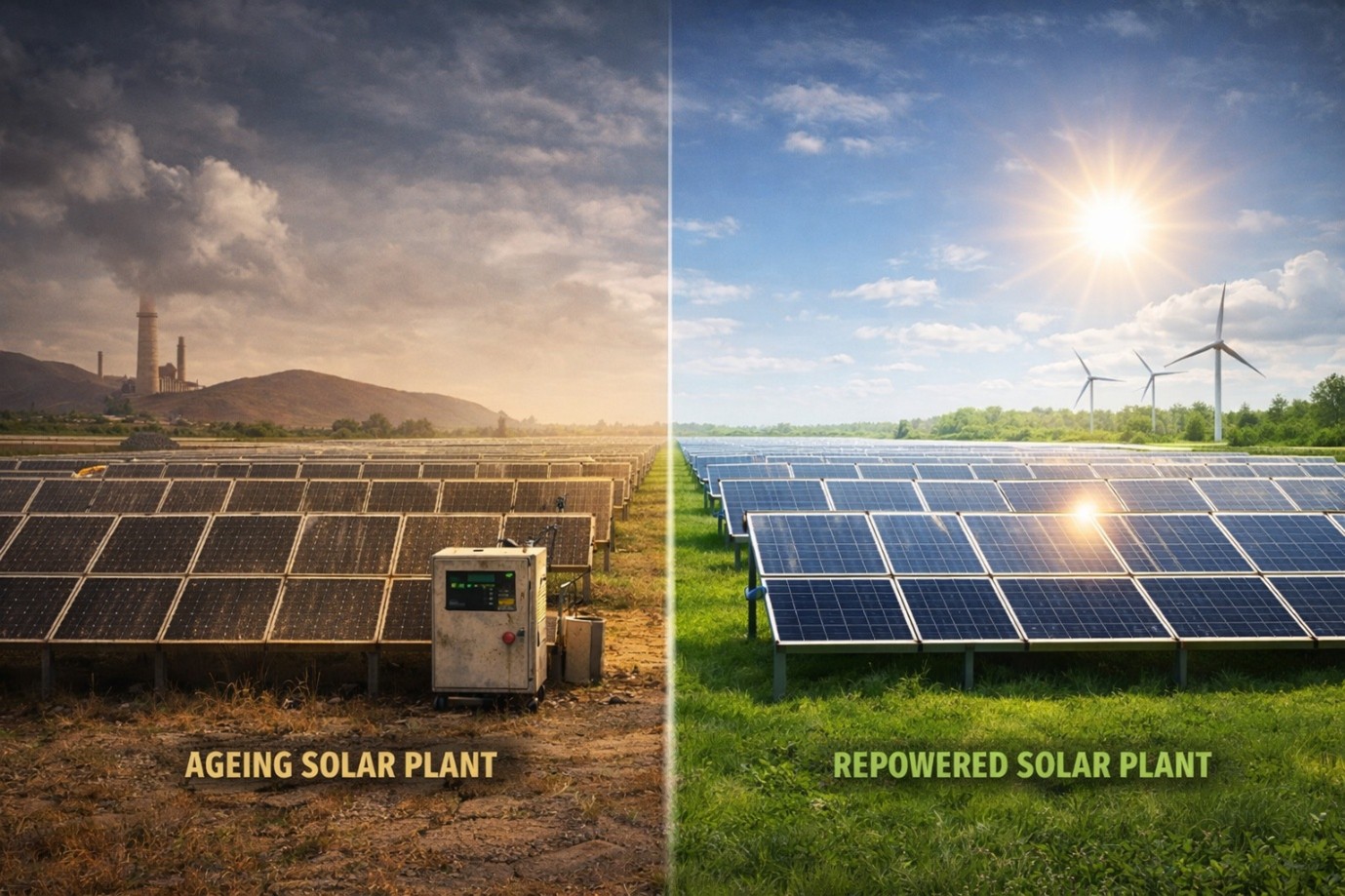
Global photovoltaic deployment has grown incredibly over the last 2 decades, meaning a large share of operating plants are now 10–20 years old. Furthermore, these installations were built with lower-efficiency modules, polycrystalline, mono facial, shorter-lifetime inverters, conservative system design, mostly central inverter configuration, and limited performance monitoring. The ageing of these plants has led to issues such as declining energy output, increased system losses, limited fault detection, and reduced operational reliability. This clearly shows the opportunity for improvements through solar repowering, PV module repowering, and broader solar plant modernisation, enabling higher energy yield, extended asset life, and improved overall system performance.
PV ageing assets are inevitable, repowering offers an innovative solution to extending the assets life and can make renewable energy truly renewable and drive the whole solar industry towards sustainability and a greener future. Repowering enables solar plant refurbishment instead of new construction, photovoltaic performance enhancement on existing land, and long-term solar lifetime extension. By addressing ageing PV assets and unlocking their second life, repowering transforms old plants into modern, efficient, and low-carbon assets, delivering higher energy output, stronger grids, and lasting value for communities. Beyond operational improvements, it minimises environmental impact, reduces resource consumption, and avoids the need for additional land, making solar energy deployment more responsible and sustainable. This approach not only maximises the potential of existing solar infrastructure but also contributes to the ultimate goal of creating a better world in a changing climate.
#GreeEnco® #CreatingABetterWorldInAChangingClimate #RepoweringofPV #AssetOptimisation #SolarPV #SecondLife #SustainableDevelopment